| // Copyright 2014 The Flutter Authors. All rights reserved. |
| // Use of this source code is governed by a BSD-style license that can be |
| // found in the LICENSE file. |
| |
| /// @docImport 'package:flutter/gestures.dart'; |
| /// @docImport 'package:flutter/material.dart'; |
| /// |
| /// @docImport 'editable_text.dart'; |
| /// @docImport 'gesture_detector.dart'; |
| /// @docImport 'implicit_animations.dart'; |
| /// @docImport 'transitions.dart'; |
| /// @docImport 'widget_span.dart'; |
| library; |
| |
| import 'dart:math'; |
| import 'dart:ui' as ui show TextHeightBehavior; |
| |
| import 'package:flutter/foundation.dart'; |
| import 'package:flutter/rendering.dart'; |
| |
| import 'basic.dart'; |
| import 'default_selection_style.dart'; |
| import 'framework.dart'; |
| import 'inherited_theme.dart'; |
| import 'media_query.dart'; |
| import 'selectable_region.dart'; |
| import 'selection_container.dart'; |
| |
| // Examples can assume: |
| // late String _name; |
| // late BuildContext context; |
| |
| /// The text style to apply to descendant [Text] widgets which don't have an |
| /// explicit style. |
| /// |
| /// {@tool dartpad} |
| /// This example shows how to use [DefaultTextStyle.merge] to create a default |
| /// text style that inherits styling information from the current default text |
| /// style and overrides some properties. |
| /// |
| /// ** See code in examples/api/lib/widgets/text/text.0.dart ** |
| /// {@end-tool} |
| /// |
| /// See also: |
| /// |
| /// * [AnimatedDefaultTextStyle], which animates changes in the text style |
| /// smoothly over a given duration. |
| /// * [DefaultTextStyleTransition], which takes a provided [Animation] to |
| /// animate changes in text style smoothly over time. |
| class DefaultTextStyle extends InheritedTheme { |
| /// Creates a default text style for the given subtree. |
| /// |
| /// Consider using [DefaultTextStyle.merge] to inherit styling information |
| /// from the current default text style for a given [BuildContext]. |
| /// |
| /// The [maxLines] property may be null (and indeed defaults to null), but if |
| /// it is not null, it must be greater than zero. |
| const DefaultTextStyle({ |
| super.key, |
| required this.style, |
| this.textAlign, |
| this.softWrap = true, |
| this.overflow = TextOverflow.clip, |
| this.maxLines, |
| this.textWidthBasis = TextWidthBasis.parent, |
| this.textHeightBehavior, |
| required super.child, |
| }) : assert(maxLines == null || maxLines > 0); |
| |
| /// A const-constructable default text style that provides fallback values. |
| /// |
| /// Returned from [of] when the given [BuildContext] doesn't have an enclosing default text style. |
| /// |
| /// This constructor creates a [DefaultTextStyle] with an invalid [child], which |
| /// means the constructed value cannot be incorporated into the tree. |
| const DefaultTextStyle.fallback({super.key}) |
| : style = const TextStyle(), |
| textAlign = null, |
| softWrap = true, |
| maxLines = null, |
| overflow = TextOverflow.clip, |
| textWidthBasis = TextWidthBasis.parent, |
| textHeightBehavior = null, |
| super(child: const _NullWidget()); |
| |
| /// Creates a default text style that overrides the text styles in scope at |
| /// this point in the widget tree. |
| /// |
| /// The given [style] is merged with the [style] from the default text style |
| /// for the [BuildContext] where the widget is inserted, and any of the other |
| /// arguments that are not null replace the corresponding properties on that |
| /// same default text style. |
| /// |
| /// This constructor cannot be used to override the [maxLines] property of the |
| /// ancestor with the value null, since null here is used to mean "defer to |
| /// ancestor". To replace a non-null [maxLines] from an ancestor with the null |
| /// value (to remove the restriction on number of lines), manually obtain the |
| /// ambient [DefaultTextStyle] using [DefaultTextStyle.of], then create a new |
| /// [DefaultTextStyle] using the [DefaultTextStyle.new] constructor directly. |
| /// See the source below for an example of how to do this (since that's |
| /// essentially what this constructor does). |
| /// |
| /// If a [textHeightBehavior] is provided, the existing configuration will be |
| /// replaced completely. To retain part of the original [textHeightBehavior], |
| /// manually obtain the ambient [DefaultTextStyle] using [DefaultTextStyle.of]. |
| static Widget merge({ |
| Key? key, |
| TextStyle? style, |
| TextAlign? textAlign, |
| bool? softWrap, |
| TextOverflow? overflow, |
| int? maxLines, |
| TextWidthBasis? textWidthBasis, |
| TextHeightBehavior? textHeightBehavior, |
| required Widget child, |
| }) { |
| return Builder( |
| builder: (BuildContext context) { |
| final DefaultTextStyle parent = DefaultTextStyle.of(context); |
| return DefaultTextStyle( |
| key: key, |
| style: parent.style.merge(style), |
| textAlign: textAlign ?? parent.textAlign, |
| softWrap: softWrap ?? parent.softWrap, |
| overflow: overflow ?? parent.overflow, |
| maxLines: maxLines ?? parent.maxLines, |
| textWidthBasis: textWidthBasis ?? parent.textWidthBasis, |
| textHeightBehavior: textHeightBehavior ?? parent.textHeightBehavior, |
| child: child, |
| ); |
| }, |
| ); |
| } |
| |
| /// The text style to apply. |
| final TextStyle style; |
| |
| /// How each line of text in the Text widget should be aligned horizontally. |
| final TextAlign? textAlign; |
| |
| /// Whether the text should break at soft line breaks. |
| /// |
| /// If false, the glyphs in the text will be positioned as if there was unlimited horizontal space. |
| /// |
| /// This also decides the [overflow] property's behavior. If this is true or null, |
| /// the glyph causing overflow, and those that follow, will not be rendered. |
| final bool softWrap; |
| |
| /// How visual overflow should be handled. |
| /// |
| /// If [softWrap] is true or null, the glyph causing overflow, and those that follow, |
| /// will not be rendered. Otherwise, it will be shown with the given overflow option. |
| final TextOverflow overflow; |
| |
| /// An optional maximum number of lines for the text to span, wrapping if necessary. |
| /// If the text exceeds the given number of lines, it will be truncated according |
| /// to [overflow]. |
| /// |
| /// If this is 1, text will not wrap. Otherwise, text will be wrapped at the |
| /// edge of the box. |
| /// |
| /// If this is non-null, it will override even explicit null values of |
| /// [Text.maxLines]. |
| final int? maxLines; |
| |
| /// The strategy to use when calculating the width of the Text. |
| /// |
| /// See [TextWidthBasis] for possible values and their implications. |
| final TextWidthBasis textWidthBasis; |
| |
| /// {@macro dart.ui.textHeightBehavior} |
| final ui.TextHeightBehavior? textHeightBehavior; |
| |
| /// The closest instance of this class that encloses the given context. |
| /// |
| /// If no such instance exists, returns an instance created by |
| /// [DefaultTextStyle.fallback], which contains fallback values. |
| /// |
| /// Typical usage is as follows: |
| /// |
| /// ```dart |
| /// DefaultTextStyle style = DefaultTextStyle.of(context); |
| /// ``` |
| static DefaultTextStyle of(BuildContext context) { |
| return context.dependOnInheritedWidgetOfExactType<DefaultTextStyle>() ?? |
| const DefaultTextStyle.fallback(); |
| } |
| |
| @override |
| bool updateShouldNotify(DefaultTextStyle oldWidget) { |
| return style != oldWidget.style || |
| textAlign != oldWidget.textAlign || |
| softWrap != oldWidget.softWrap || |
| overflow != oldWidget.overflow || |
| maxLines != oldWidget.maxLines || |
| textWidthBasis != oldWidget.textWidthBasis || |
| textHeightBehavior != oldWidget.textHeightBehavior; |
| } |
| |
| @override |
| Widget wrap(BuildContext context, Widget child) { |
| return DefaultTextStyle( |
| style: style, |
| textAlign: textAlign, |
| softWrap: softWrap, |
| overflow: overflow, |
| maxLines: maxLines, |
| textWidthBasis: textWidthBasis, |
| textHeightBehavior: textHeightBehavior, |
| child: child, |
| ); |
| } |
| |
| @override |
| void debugFillProperties(DiagnosticPropertiesBuilder properties) { |
| super.debugFillProperties(properties); |
| style.debugFillProperties(properties); |
| properties.add(EnumProperty<TextAlign>('textAlign', textAlign, defaultValue: null)); |
| properties.add( |
| FlagProperty( |
| 'softWrap', |
| value: softWrap, |
| ifTrue: 'wrapping at box width', |
| ifFalse: 'no wrapping except at line break characters', |
| showName: true, |
| ), |
| ); |
| properties.add(EnumProperty<TextOverflow>('overflow', overflow, defaultValue: null)); |
| properties.add(IntProperty('maxLines', maxLines, defaultValue: null)); |
| properties.add( |
| EnumProperty<TextWidthBasis>( |
| 'textWidthBasis', |
| textWidthBasis, |
| defaultValue: TextWidthBasis.parent, |
| ), |
| ); |
| properties.add( |
| DiagnosticsProperty<ui.TextHeightBehavior>( |
| 'textHeightBehavior', |
| textHeightBehavior, |
| defaultValue: null, |
| ), |
| ); |
| } |
| } |
| |
| class _NullWidget extends StatelessWidget { |
| const _NullWidget(); |
| |
| @override |
| Widget build(BuildContext context) { |
| throw FlutterError( |
| 'A DefaultTextStyle constructed with DefaultTextStyle.fallback cannot be incorporated into the widget tree, ' |
| 'it is meant only to provide a fallback value returned by DefaultTextStyle.of() ' |
| 'when no enclosing default text style is present in a BuildContext.', |
| ); |
| } |
| } |
| |
| /// The [TextHeightBehavior] that will apply to descendant [Text] and [EditableText] |
| /// widgets which have not explicitly set [Text.textHeightBehavior]. |
| /// |
| /// If there is a [DefaultTextStyle] with a non-null [DefaultTextStyle.textHeightBehavior] |
| /// below this widget, the [DefaultTextStyle.textHeightBehavior] will be used |
| /// over this widget's [TextHeightBehavior]. |
| /// |
| /// See also: |
| /// |
| /// * [DefaultTextStyle], which defines a [TextStyle] to apply to descendant |
| /// [Text] widgets. |
| class DefaultTextHeightBehavior extends InheritedTheme { |
| /// Creates a default text height behavior for the given subtree. |
| const DefaultTextHeightBehavior({ |
| super.key, |
| required this.textHeightBehavior, |
| required super.child, |
| }); |
| |
| /// {@macro dart.ui.textHeightBehavior} |
| final TextHeightBehavior textHeightBehavior; |
| |
| /// The closest instance of [DefaultTextHeightBehavior] that encloses the |
| /// given context, or null if none is found. |
| /// |
| /// If no such instance exists, this method will return `null`. |
| /// |
| /// Calling this method will create a dependency on the closest |
| /// [DefaultTextHeightBehavior] in the [context], if there is one. |
| /// |
| /// Typical usage is as follows: |
| /// |
| /// ```dart |
| /// TextHeightBehavior? defaultTextHeightBehavior = DefaultTextHeightBehavior.of(context); |
| /// ``` |
| /// |
| /// See also: |
| /// |
| /// * [DefaultTextHeightBehavior.maybeOf], which is similar to this method, |
| /// but asserts if no [DefaultTextHeightBehavior] ancestor is found. |
| static TextHeightBehavior? maybeOf(BuildContext context) { |
| return context |
| .dependOnInheritedWidgetOfExactType<DefaultTextHeightBehavior>() |
| ?.textHeightBehavior; |
| } |
| |
| /// The closest instance of [DefaultTextHeightBehavior] that encloses the |
| /// given context. |
| /// |
| /// If no such instance exists, this method will assert in debug mode, and |
| /// throw an exception in release mode. |
| /// |
| /// Typical usage is as follows: |
| /// |
| /// ```dart |
| /// TextHeightBehavior defaultTextHeightBehavior = DefaultTextHeightBehavior.of(context); |
| /// ``` |
| /// |
| /// Calling this method will create a dependency on the closest |
| /// [DefaultTextHeightBehavior] in the [context]. |
| /// |
| /// See also: |
| /// |
| /// * [DefaultTextHeightBehavior.maybeOf], which is similar to this method, |
| /// but returns null if no [DefaultTextHeightBehavior] ancestor is found. |
| static TextHeightBehavior of(BuildContext context) { |
| final TextHeightBehavior? behavior = maybeOf(context); |
| assert(() { |
| if (behavior == null) { |
| throw FlutterError( |
| 'DefaultTextHeightBehavior.of() was called with a context that does not contain a ' |
| 'DefaultTextHeightBehavior widget.\n' |
| 'No DefaultTextHeightBehavior widget ancestor could be found starting from the ' |
| 'context that was passed to DefaultTextHeightBehavior.of(). This can happen ' |
| 'because you are using a widget that looks for a DefaultTextHeightBehavior ' |
| 'ancestor, but no such ancestor exists.\n' |
| 'The context used was:\n' |
| ' $context', |
| ); |
| } |
| return true; |
| }()); |
| return behavior!; |
| } |
| |
| @override |
| bool updateShouldNotify(DefaultTextHeightBehavior oldWidget) { |
| return textHeightBehavior != oldWidget.textHeightBehavior; |
| } |
| |
| @override |
| Widget wrap(BuildContext context, Widget child) { |
| return DefaultTextHeightBehavior(textHeightBehavior: textHeightBehavior, child: child); |
| } |
| |
| @override |
| void debugFillProperties(DiagnosticPropertiesBuilder properties) { |
| super.debugFillProperties(properties); |
| properties.add( |
| DiagnosticsProperty<ui.TextHeightBehavior>( |
| 'textHeightBehavior', |
| textHeightBehavior, |
| defaultValue: null, |
| ), |
| ); |
| } |
| } |
| |
| /// A run of text with a single style. |
| /// |
| /// The [Text] widget displays a string of text with single style. The string |
| /// might break across multiple lines or might all be displayed on the same line |
| /// depending on the layout constraints. |
| /// |
| /// The [style] argument is optional. When omitted, the text will use the style |
| /// from the closest enclosing [DefaultTextStyle]. If the given style's |
| /// [TextStyle.inherit] property is true (the default), the given style will |
| /// be merged with the closest enclosing [DefaultTextStyle]. This merging |
| /// behavior is useful, for example, to make the text bold while using the |
| /// default font family and size. |
| /// |
| /// {@tool snippet} |
| /// |
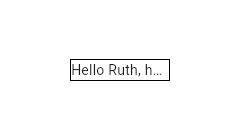
| /// This example shows how to display text using the [Text] widget with the |
| /// [overflow] set to [TextOverflow.ellipsis]. |
| /// |
| ///  |
| /// |
| /// ```dart |
| /// Container( |
| /// width: 100, |
| /// decoration: BoxDecoration(border: Border.all()), |
| /// child: Text(overflow: TextOverflow.ellipsis, 'Hello $_name, how are you?')) |
| /// ``` |
| /// {@end-tool} |
| /// |
| /// {@tool snippet} |
| /// |
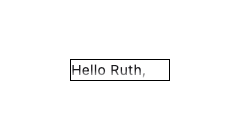
| /// Setting [maxLines] to `1` is not equivalent to disabling soft wrapping with |
| /// [softWrap]. This is apparent when using [TextOverflow.fade] as the following |
| /// examples show. |
| /// |
| ///  |
| /// |
| /// ```dart |
| /// Text( |
| /// overflow: TextOverflow.fade, |
| /// maxLines: 1, |
| /// 'Hello $_name, how are you?') |
| /// ``` |
| /// |
| /// Here soft wrapping is enabled and the [Text] widget tries to wrap the words |
| /// "how are you?" to a second line. This is prevented by the [maxLines] value |
| /// of `1`. The result is that a second line overflows and the fade appears in a |
| /// horizontal direction at the bottom. |
| /// |
| ///  |
| /// |
| /// ```dart |
| /// Text( |
| /// overflow: TextOverflow.fade, |
| /// softWrap: false, |
| /// 'Hello $_name, how are you?') |
| /// ``` |
| /// |
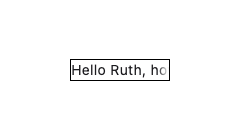
| /// Here soft wrapping is disabled with `softWrap: false` and the [Text] widget |
| /// attempts to display its text in a single unbroken line. The result is that |
| /// the single line overflows and the fade appears in a vertical direction at |
| /// the right. |
| /// |
| /// {@end-tool} |
| /// |
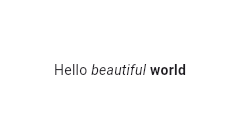
| /// Using the [Text.rich] constructor, the [Text] widget can |
| /// display a paragraph with differently styled [TextSpan]s. The sample |
| /// that follows displays "Hello beautiful world" with different styles |
| /// for each word. |
| /// |
| /// {@tool snippet} |
| /// |
| ///  |
| /// |
| /// ```dart |
| /// const Text.rich( |
| /// TextSpan( |
| /// text: 'Hello', // default text style |
| /// children: <TextSpan>[ |
| /// TextSpan(text: ' beautiful ', style: TextStyle(fontStyle: FontStyle.italic)), |
| /// TextSpan(text: 'world', style: TextStyle(fontWeight: FontWeight.bold)), |
| /// ], |
| /// ), |
| /// ) |
| /// ``` |
| /// {@end-tool} |
| /// |
| /// ## Interactivity |
| /// |
| /// To make [Text] react to touch events, wrap it in a [GestureDetector] widget |
| /// with a [GestureDetector.onTap] handler. |
| /// |
| /// In a Material Design application, consider using a [TextButton] instead, or |
| /// if that isn't appropriate, at least using an [InkWell] instead of |
| /// [GestureDetector]. |
| /// |
| /// To make sections of the text interactive, use [RichText] and specify a |
| /// [TapGestureRecognizer] as the [TextSpan.recognizer] of the relevant part of |
| /// the text. |
| /// |
| /// ## Selection |
| /// |
| /// [Text] is not selectable by default. To make a [Text] selectable, one can |
| /// wrap a subtree with a [SelectionArea] widget. To exclude a part of a subtree |
| /// under [SelectionArea] from selection, once can also wrap that part of the |
| /// subtree with [SelectionContainer.disabled]. |
| /// |
| /// {@tool dartpad} |
| /// This sample demonstrates how to disable selection for a Text under a |
| /// SelectionArea. |
| /// |
| /// ** See code in examples/api/lib/material/selection_container/selection_container_disabled.0.dart ** |
| /// {@end-tool} |
| /// |
| /// See also: |
| /// |
| /// * [RichText], which gives you more control over the text styles. |
| /// * [DefaultTextStyle], which sets default styles for [Text] widgets. |
| /// * [SelectableRegion], which provides an overview of the selection system. |
| class Text extends StatelessWidget { |
| /// Creates a text widget. |
| /// |
| /// If the [style] argument is null, the text will use the style from the |
| /// closest enclosing [DefaultTextStyle]. |
| /// |
| /// The [overflow] property's behavior is affected by the [softWrap] argument. |
| /// If the [softWrap] is true or null, the glyph causing overflow, and those |
| /// that follow, will not be rendered. Otherwise, it will be shown with the |
| /// given overflow option. |
| const Text( |
| String this.data, { |
| super.key, |
| this.style, |
| this.strutStyle, |
| this.textAlign, |
| this.textDirection, |
| this.locale, |
| this.softWrap, |
| this.overflow, |
| @Deprecated( |
| 'Use textScaler instead. ' |
| 'Use of textScaleFactor was deprecated in preparation for the upcoming nonlinear text scaling support. ' |
| 'This feature was deprecated after v3.12.0-2.0.pre.', |
| ) |
| this.textScaleFactor, |
| this.textScaler, |
| this.maxLines, |
| this.semanticsLabel, |
| this.textWidthBasis, |
| this.textHeightBehavior, |
| this.selectionColor, |
| }) : textSpan = null, |
| assert( |
| textScaler == null || textScaleFactor == null, |
| 'textScaleFactor is deprecated and cannot be specified when textScaler is specified.', |
| ); |
| |
| /// Creates a text widget with a [InlineSpan]. |
| /// |
| /// The following subclasses of [InlineSpan] may be used to build rich text: |
| /// |
| /// * [TextSpan]s define text and children [InlineSpan]s. |
| /// * [WidgetSpan]s define embedded inline widgets. |
| /// |
| /// See [RichText] which provides a lower-level way to draw text. |
| const Text.rich( |
| InlineSpan this.textSpan, { |
| super.key, |
| this.style, |
| this.strutStyle, |
| this.textAlign, |
| this.textDirection, |
| this.locale, |
| this.softWrap, |
| this.overflow, |
| @Deprecated( |
| 'Use textScaler instead. ' |
| 'Use of textScaleFactor was deprecated in preparation for the upcoming nonlinear text scaling support. ' |
| 'This feature was deprecated after v3.12.0-2.0.pre.', |
| ) |
| this.textScaleFactor, |
| this.textScaler, |
| this.maxLines, |
| this.semanticsLabel, |
| this.textWidthBasis, |
| this.textHeightBehavior, |
| this.selectionColor, |
| }) : data = null, |
| assert( |
| textScaler == null || textScaleFactor == null, |
| 'textScaleFactor is deprecated and cannot be specified when textScaler is specified.', |
| ); |
| |
| /// The text to display. |
| /// |
| /// This will be null if a [textSpan] is provided instead. |
| final String? data; |
| |
| /// The text to display as a [InlineSpan]. |
| /// |
| /// This will be null if [data] is provided instead. |
| final InlineSpan? textSpan; |
| |
| /// If non-null, the style to use for this text. |
| /// |
| /// If the style's "inherit" property is true, the style will be merged with |
| /// the closest enclosing [DefaultTextStyle]. Otherwise, the style will |
| /// replace the closest enclosing [DefaultTextStyle]. |
| final TextStyle? style; |
| |
| /// {@macro flutter.painting.textPainter.strutStyle} |
| final StrutStyle? strutStyle; |
| |
| /// How the text should be aligned horizontally. |
| final TextAlign? textAlign; |
| |
| /// The directionality of the text. |
| /// |
| /// This decides how [textAlign] values like [TextAlign.start] and |
| /// [TextAlign.end] are interpreted. |
| /// |
| /// This is also used to disambiguate how to render bidirectional text. For |
| /// example, if the [data] is an English phrase followed by a Hebrew phrase, |
| /// in a [TextDirection.ltr] context the English phrase will be on the left |
| /// and the Hebrew phrase to its right, while in a [TextDirection.rtl] |
| /// context, the English phrase will be on the right and the Hebrew phrase on |
| /// its left. |
| /// |
| /// Defaults to the ambient [Directionality], if any. |
| final TextDirection? textDirection; |
| |
| /// Used to select a font when the same Unicode character can |
| /// be rendered differently, depending on the locale. |
| /// |
| /// It's rarely necessary to set this property. By default its value |
| /// is inherited from the enclosing app with `Localizations.localeOf(context)`. |
| /// |
| /// See [RenderParagraph.locale] for more information. |
| final Locale? locale; |
| |
| /// Whether the text should break at soft line breaks. |
| /// |
| /// If false, the glyphs in the text will be positioned as if there was unlimited horizontal space. |
| final bool? softWrap; |
| |
| /// How visual overflow should be handled. |
| /// |
| /// If this is null [TextStyle.overflow] will be used, otherwise the value |
| /// from the nearest [DefaultTextStyle] ancestor will be used. |
| final TextOverflow? overflow; |
| |
| /// Deprecated. Will be removed in a future version of Flutter. Use |
| /// [textScaler] instead. |
| /// |
| /// The number of font pixels for each logical pixel. |
| /// |
| /// For example, if the text scale factor is 1.5, text will be 50% larger than |
| /// the specified font size. |
| /// |
| /// The value given to the constructor as textScaleFactor. If null, will |
| /// use the [MediaQueryData.textScaleFactor] obtained from the ambient |
| /// [MediaQuery], or 1.0 if there is no [MediaQuery] in scope. |
| @Deprecated( |
| 'Use textScaler instead. ' |
| 'Use of textScaleFactor was deprecated in preparation for the upcoming nonlinear text scaling support. ' |
| 'This feature was deprecated after v3.12.0-2.0.pre.', |
| ) |
| final double? textScaleFactor; |
| |
| /// {@macro flutter.painting.textPainter.textScaler} |
| final TextScaler? textScaler; |
| |
| /// An optional maximum number of lines for the text to span, wrapping if necessary. |
| /// If the text exceeds the given number of lines, it will be truncated according |
| /// to [overflow]. |
| /// |
| /// If this is 1, text will not wrap. Otherwise, text will be wrapped at the |
| /// edge of the box. |
| /// |
| /// If this is null, but there is an ambient [DefaultTextStyle] that specifies |
| /// an explicit number for its [DefaultTextStyle.maxLines], then the |
| /// [DefaultTextStyle] value will take precedence. You can use a [RichText] |
| /// widget directly to entirely override the [DefaultTextStyle]. |
| final int? maxLines; |
| |
| /// {@template flutter.widgets.Text.semanticsLabel} |
| /// An alternative semantics label for this text. |
| /// |
| /// If present, the semantics of this widget will contain this value instead |
| /// of the actual text. This will overwrite any of the semantics labels applied |
| /// directly to the [TextSpan]s. |
| /// |
| /// This is useful for replacing abbreviations or shorthands with the full |
| /// text value: |
| /// |
| /// ```dart |
| /// const Text(r'$$', semanticsLabel: 'Double dollars') |
| /// ``` |
| /// {@endtemplate} |
| final String? semanticsLabel; |
| |
| /// {@macro flutter.painting.textPainter.textWidthBasis} |
| final TextWidthBasis? textWidthBasis; |
| |
| /// {@macro dart.ui.textHeightBehavior} |
| final ui.TextHeightBehavior? textHeightBehavior; |
| |
| /// The color to use when painting the selection. |
| /// |
| /// This is ignored if [SelectionContainer.maybeOf] returns null |
| /// in the [BuildContext] of the [Text] widget. |
| /// |
| /// If null, the ambient [DefaultSelectionStyle] is used (if any); failing |
| /// that, the selection color defaults to [DefaultSelectionStyle.defaultColor] |
| /// (semi-transparent grey). |
| final Color? selectionColor; |
| |
| @override |
| Widget build(BuildContext context) { |
| final DefaultTextStyle defaultTextStyle = DefaultTextStyle.of(context); |
| TextStyle? effectiveTextStyle = style; |
| if (style == null || style!.inherit) { |
| effectiveTextStyle = defaultTextStyle.style.merge(style); |
| } |
| if (MediaQuery.boldTextOf(context)) { |
| effectiveTextStyle = effectiveTextStyle!.merge(const TextStyle(fontWeight: FontWeight.bold)); |
| } |
| final SelectionRegistrar? registrar = SelectionContainer.maybeOf(context); |
| final TextScaler textScaler = switch ((this.textScaler, textScaleFactor)) { |
| (final TextScaler textScaler, _) => textScaler, |
| // For unmigrated apps, fall back to textScaleFactor. |
| (null, final double textScaleFactor) => TextScaler.linear(textScaleFactor), |
| (null, null) => MediaQuery.textScalerOf(context), |
| }; |
| late Widget result; |
| if (registrar != null) { |
| result = MouseRegion( |
| cursor: DefaultSelectionStyle.of(context).mouseCursor ?? SystemMouseCursors.text, |
| child: _SelectableTextContainer( |
| textAlign: textAlign ?? defaultTextStyle.textAlign ?? TextAlign.start, |
| textDirection: |
| textDirection, // RichText uses Directionality.of to obtain a default if this is null. |
| locale: |
| locale, // RichText uses Localizations.localeOf to obtain a default if this is null |
| softWrap: softWrap ?? defaultTextStyle.softWrap, |
| overflow: overflow ?? effectiveTextStyle?.overflow ?? defaultTextStyle.overflow, |
| textScaler: textScaler, |
| maxLines: maxLines ?? defaultTextStyle.maxLines, |
| strutStyle: strutStyle, |
| textWidthBasis: textWidthBasis ?? defaultTextStyle.textWidthBasis, |
| textHeightBehavior: |
| textHeightBehavior ?? |
| defaultTextStyle.textHeightBehavior ?? |
| DefaultTextHeightBehavior.maybeOf(context), |
| selectionColor: |
| selectionColor ?? |
| DefaultSelectionStyle.of(context).selectionColor ?? |
| DefaultSelectionStyle.defaultColor, |
| text: TextSpan( |
| style: effectiveTextStyle, |
| text: data, |
| children: textSpan != null ? <InlineSpan>[textSpan!] : null, |
| ), |
| ), |
| ); |
| } else { |
| result = RichText( |
| textAlign: textAlign ?? defaultTextStyle.textAlign ?? TextAlign.start, |
| textDirection: |
| textDirection, // RichText uses Directionality.of to obtain a default if this is null. |
| locale: locale, // RichText uses Localizations.localeOf to obtain a default if this is null |
| softWrap: softWrap ?? defaultTextStyle.softWrap, |
| overflow: overflow ?? effectiveTextStyle?.overflow ?? defaultTextStyle.overflow, |
| textScaler: textScaler, |
| maxLines: maxLines ?? defaultTextStyle.maxLines, |
| strutStyle: strutStyle, |
| textWidthBasis: textWidthBasis ?? defaultTextStyle.textWidthBasis, |
| textHeightBehavior: |
| textHeightBehavior ?? |
| defaultTextStyle.textHeightBehavior ?? |
| DefaultTextHeightBehavior.maybeOf(context), |
| selectionColor: |
| selectionColor ?? |
| DefaultSelectionStyle.of(context).selectionColor ?? |
| DefaultSelectionStyle.defaultColor, |
| text: TextSpan( |
| style: effectiveTextStyle, |
| text: data, |
| children: textSpan != null ? <InlineSpan>[textSpan!] : null, |
| ), |
| ); |
| } |
| if (semanticsLabel != null) { |
| result = Semantics( |
| textDirection: textDirection, |
| label: semanticsLabel, |
| child: ExcludeSemantics(child: result), |
| ); |
| } |
| return result; |
| } |
| |
| @override |
| void debugFillProperties(DiagnosticPropertiesBuilder properties) { |
| super.debugFillProperties(properties); |
| properties.add(StringProperty('data', data, showName: false)); |
| if (textSpan != null) { |
| properties.add( |
| textSpan!.toDiagnosticsNode(name: 'textSpan', style: DiagnosticsTreeStyle.transition), |
| ); |
| } |
| style?.debugFillProperties(properties); |
| properties.add(EnumProperty<TextAlign>('textAlign', textAlign, defaultValue: null)); |
| properties.add(EnumProperty<TextDirection>('textDirection', textDirection, defaultValue: null)); |
| properties.add(DiagnosticsProperty<Locale>('locale', locale, defaultValue: null)); |
| properties.add( |
| FlagProperty( |
| 'softWrap', |
| value: softWrap, |
| ifTrue: 'wrapping at box width', |
| ifFalse: 'no wrapping except at line break characters', |
| showName: true, |
| ), |
| ); |
| properties.add(EnumProperty<TextOverflow>('overflow', overflow, defaultValue: null)); |
| properties.add(DoubleProperty('textScaleFactor', textScaleFactor, defaultValue: null)); |
| properties.add(IntProperty('maxLines', maxLines, defaultValue: null)); |
| properties.add( |
| EnumProperty<TextWidthBasis>('textWidthBasis', textWidthBasis, defaultValue: null), |
| ); |
| properties.add( |
| DiagnosticsProperty<ui.TextHeightBehavior>( |
| 'textHeightBehavior', |
| textHeightBehavior, |
| defaultValue: null, |
| ), |
| ); |
| if (semanticsLabel != null) { |
| properties.add(StringProperty('semanticsLabel', semanticsLabel)); |
| } |
| } |
| } |
| |
| class _SelectableTextContainer extends StatefulWidget { |
| const _SelectableTextContainer({ |
| required this.text, |
| required this.textAlign, |
| this.textDirection, |
| required this.softWrap, |
| required this.overflow, |
| required this.textScaler, |
| this.maxLines, |
| this.locale, |
| this.strutStyle, |
| required this.textWidthBasis, |
| this.textHeightBehavior, |
| required this.selectionColor, |
| }); |
| |
| final TextSpan text; |
| final TextAlign textAlign; |
| final TextDirection? textDirection; |
| final bool softWrap; |
| final TextOverflow overflow; |
| final TextScaler textScaler; |
| final int? maxLines; |
| final Locale? locale; |
| final StrutStyle? strutStyle; |
| final TextWidthBasis textWidthBasis; |
| final ui.TextHeightBehavior? textHeightBehavior; |
| final Color selectionColor; |
| |
| @override |
| State<_SelectableTextContainer> createState() => _SelectableTextContainerState(); |
| } |
| |
| class _SelectableTextContainerState extends State<_SelectableTextContainer> { |
| late final _SelectableTextContainerDelegate _selectionDelegate; |
| final GlobalKey _textKey = GlobalKey(); |
| |
| @override |
| void initState() { |
| super.initState(); |
| _selectionDelegate = _SelectableTextContainerDelegate(_textKey); |
| } |
| |
| @override |
| void dispose() { |
| _selectionDelegate.dispose(); |
| super.dispose(); |
| } |
| |
| @override |
| Widget build(BuildContext context) { |
| return SelectionContainer( |
| delegate: _selectionDelegate, |
| // Use [_RichText] wrapper so the underlying [RenderParagraph] can register |
| // its [Selectable]s to the [SelectionContainer] created by this widget. |
| child: _RichText( |
| textKey: _textKey, |
| textAlign: widget.textAlign, |
| textDirection: widget.textDirection, |
| locale: widget.locale, |
| softWrap: widget.softWrap, |
| overflow: widget.overflow, |
| textScaler: widget.textScaler, |
| maxLines: widget.maxLines, |
| strutStyle: widget.strutStyle, |
| textWidthBasis: widget.textWidthBasis, |
| textHeightBehavior: widget.textHeightBehavior, |
| selectionColor: widget.selectionColor, |
| text: widget.text, |
| ), |
| ); |
| } |
| } |
| |
| class _RichText extends StatelessWidget { |
| const _RichText({ |
| this.textKey, |
| required this.text, |
| required this.textAlign, |
| this.textDirection, |
| required this.softWrap, |
| required this.overflow, |
| required this.textScaler, |
| this.maxLines, |
| this.locale, |
| this.strutStyle, |
| required this.textWidthBasis, |
| this.textHeightBehavior, |
| required this.selectionColor, |
| }); |
| |
| final GlobalKey? textKey; |
| final InlineSpan text; |
| final TextAlign textAlign; |
| final TextDirection? textDirection; |
| final bool softWrap; |
| final TextOverflow overflow; |
| final TextScaler textScaler; |
| final int? maxLines; |
| final Locale? locale; |
| final StrutStyle? strutStyle; |
| final TextWidthBasis textWidthBasis; |
| final ui.TextHeightBehavior? textHeightBehavior; |
| final Color selectionColor; |
| |
| @override |
| Widget build(BuildContext context) { |
| final SelectionRegistrar? registrar = SelectionContainer.maybeOf(context); |
| return RichText( |
| key: textKey, |
| textAlign: textAlign, |
| textDirection: textDirection, |
| locale: locale, |
| softWrap: softWrap, |
| overflow: overflow, |
| textScaler: textScaler, |
| maxLines: maxLines, |
| strutStyle: strutStyle, |
| textWidthBasis: textWidthBasis, |
| textHeightBehavior: textHeightBehavior, |
| selectionRegistrar: registrar, |
| selectionColor: selectionColor, |
| text: text, |
| ); |
| } |
| } |
| |
| // In practice some selectables like widgetspan shift several pixels. So when |
| // the vertical position diff is within the threshold, compare the horizontal |
| // position to make the compareScreenOrder function more robust. |
| const double _kSelectableVerticalComparingThreshold = 3.0; |
| |
| class _SelectableTextContainerDelegate extends StaticSelectionContainerDelegate { |
| _SelectableTextContainerDelegate(GlobalKey textKey) : _textKey = textKey; |
| |
| final GlobalKey _textKey; |
| RenderParagraph get paragraph => _textKey.currentContext!.findRenderObject()! as RenderParagraph; |
| |
| @override |
| SelectionResult handleSelectParagraph(SelectParagraphSelectionEvent event) { |
| final SelectionResult result = _handleSelectParagraph(event); |
| super.didReceiveSelectionBoundaryEvents(); |
| return result; |
| } |
| |
| SelectionResult _handleSelectParagraph(SelectParagraphSelectionEvent event) { |
| if (event.absorb) { |
| for (int index = 0; index < selectables.length; index += 1) { |
| dispatchSelectionEventToChild(selectables[index], event); |
| } |
| currentSelectionStartIndex = 0; |
| currentSelectionEndIndex = selectables.length - 1; |
| return SelectionResult.next; |
| } |
| |
| // First pass, if the position is on a placeholder then dispatch the selection |
| // event to the [Selectable] at the location and terminate. |
| for (int index = 0; index < selectables.length; index += 1) { |
| final bool selectableIsPlaceholder = |
| !paragraph.selectableBelongsToParagraph(selectables[index]); |
| if (selectableIsPlaceholder && selectables[index].boundingBoxes.isNotEmpty) { |
| for (final Rect rect in selectables[index].boundingBoxes) { |
| final Rect globalRect = MatrixUtils.transformRect( |
| selectables[index].getTransformTo(null), |
| rect, |
| ); |
| if (globalRect.contains(event.globalPosition)) { |
| currentSelectionStartIndex = currentSelectionEndIndex = index; |
| return dispatchSelectionEventToChild(selectables[index], event); |
| } |
| } |
| } |
| } |
| |
| SelectionResult? lastSelectionResult; |
| bool foundStart = false; |
| int? lastNextIndex; |
| for (int index = 0; index < selectables.length; index += 1) { |
| if (!paragraph.selectableBelongsToParagraph(selectables[index])) { |
| if (foundStart) { |
| final SelectionEvent synthesizedEvent = SelectParagraphSelectionEvent( |
| globalPosition: event.globalPosition, |
| absorb: true, |
| ); |
| final SelectionResult result = dispatchSelectionEventToChild( |
| selectables[index], |
| synthesizedEvent, |
| ); |
| if (selectables.length - 1 == index) { |
| currentSelectionEndIndex = index; |
| _flushInactiveSelections(); |
| return result; |
| } |
| } |
| continue; |
| } |
| final SelectionGeometry existingGeometry = selectables[index].value; |
| lastSelectionResult = dispatchSelectionEventToChild(selectables[index], event); |
| if (index == selectables.length - 1 && lastSelectionResult == SelectionResult.next) { |
| if (foundStart) { |
| currentSelectionEndIndex = index; |
| } else { |
| currentSelectionStartIndex = currentSelectionEndIndex = index; |
| } |
| return SelectionResult.next; |
| } |
| if (lastSelectionResult == SelectionResult.next) { |
| if (selectables[index].value == existingGeometry && !foundStart) { |
| lastNextIndex = index; |
| } |
| if (selectables[index].value != existingGeometry && !foundStart) { |
| assert(selectables[index].boundingBoxes.isNotEmpty); |
| assert(selectables[index].value.selectionRects.isNotEmpty); |
| final bool selectionAtStartOfSelectable = selectables[index].boundingBoxes[0].overlaps( |
| selectables[index].value.selectionRects[0], |
| ); |
| int startIndex = 0; |
| if (lastNextIndex != null && selectionAtStartOfSelectable) { |
| startIndex = lastNextIndex + 1; |
| } else { |
| startIndex = lastNextIndex == null && selectionAtStartOfSelectable ? 0 : index; |
| } |
| for (int i = startIndex; i < index; i += 1) { |
| final SelectionEvent synthesizedEvent = SelectParagraphSelectionEvent( |
| globalPosition: event.globalPosition, |
| absorb: true, |
| ); |
| dispatchSelectionEventToChild(selectables[i], synthesizedEvent); |
| } |
| currentSelectionStartIndex = startIndex; |
| foundStart = true; |
| } |
| continue; |
| } |
| if (index == 0 && lastSelectionResult == SelectionResult.previous) { |
| return SelectionResult.previous; |
| } |
| if (selectables[index].value != existingGeometry) { |
| if (!foundStart && lastNextIndex == null) { |
| currentSelectionStartIndex = 0; |
| for (int i = 0; i < index; i += 1) { |
| final SelectionEvent synthesizedEvent = SelectParagraphSelectionEvent( |
| globalPosition: event.globalPosition, |
| absorb: true, |
| ); |
| dispatchSelectionEventToChild(selectables[i], synthesizedEvent); |
| } |
| } |
| currentSelectionEndIndex = index; |
| // Geometry has changed as a result of select paragraph, need to clear the |
| // selection of other selectables to keep selection in sync. |
| _flushInactiveSelections(); |
| } |
| return SelectionResult.end; |
| } |
| assert(lastSelectionResult == null); |
| return SelectionResult.end; |
| } |
| |
| /// Initializes the selection of the selectable children. |
| /// |
| /// The goal is to find the selectable child that contains the selection edge. |
| /// Returns [SelectionResult.end] if the selection edge ends on any of the |
| /// children. Otherwise, it returns [SelectionResult.previous] if the selection |
| /// does not reach any of its children. Returns [SelectionResult.next] |
| /// if the selection reaches the end of its children. |
| /// |
| /// Ideally, this method should only be called twice at the beginning of the |
| /// drag selection, once for start edge update event, once for end edge update |
| /// event. |
| SelectionResult _initSelection(SelectionEdgeUpdateEvent event, {required bool isEnd}) { |
| assert( |
| (isEnd && currentSelectionEndIndex == -1) || (!isEnd && currentSelectionStartIndex == -1), |
| ); |
| SelectionResult? finalResult; |
| // Begin the search for the selection edge at the opposite edge if it exists. |
| final bool hasOppositeEdge = |
| isEnd ? currentSelectionStartIndex != -1 : currentSelectionEndIndex != -1; |
| int newIndex = switch ((isEnd, hasOppositeEdge)) { |
| (true, true) => currentSelectionStartIndex, |
| (true, false) => 0, |
| (false, true) => currentSelectionEndIndex, |
| (false, false) => 0, |
| }; |
| bool? forward; |
| late SelectionResult currentSelectableResult; |
| // This loop sends the selection event to one of the following to determine |
| // the direction of the search. |
| // - The opposite edge index if it exists. |
| // - Index 0 if the opposite edge index does not exist. |
| // |
| // If the result is `SelectionResult.next`, this loop look backward. |
| // Otherwise, it looks forward. |
| // |
| // The terminate condition are: |
| // 1. the selectable returns end, pending, none. |
| // 2. the selectable returns previous when looking forward. |
| // 2. the selectable returns next when looking backward. |
| while (newIndex < selectables.length && newIndex >= 0 && finalResult == null) { |
| currentSelectableResult = dispatchSelectionEventToChild(selectables[newIndex], event); |
| switch (currentSelectableResult) { |
| case SelectionResult.end: |
| case SelectionResult.pending: |
| case SelectionResult.none: |
| finalResult = currentSelectableResult; |
| case SelectionResult.next: |
| if (forward == false) { |
| newIndex += 1; |
| finalResult = SelectionResult.end; |
| } else if (newIndex == selectables.length - 1) { |
| finalResult = currentSelectableResult; |
| } else { |
| forward = true; |
| newIndex += 1; |
| } |
| case SelectionResult.previous: |
| if (forward ?? false) { |
| newIndex -= 1; |
| finalResult = SelectionResult.end; |
| } else if (newIndex == 0) { |
| finalResult = currentSelectableResult; |
| } else { |
| forward = false; |
| newIndex -= 1; |
| } |
| } |
| } |
| if (isEnd) { |
| currentSelectionEndIndex = newIndex; |
| } else { |
| currentSelectionStartIndex = newIndex; |
| } |
| _flushInactiveSelections(); |
| return finalResult!; |
| } |
| |
| SelectionResult _adjustSelection(SelectionEdgeUpdateEvent event, {required bool isEnd}) { |
| assert(() { |
| if (isEnd) { |
| assert(currentSelectionEndIndex < selectables.length && currentSelectionEndIndex >= 0); |
| return true; |
| } |
| assert(currentSelectionStartIndex < selectables.length && currentSelectionStartIndex >= 0); |
| return true; |
| }()); |
| SelectionResult? finalResult; |
| // Determines if the edge being adjusted is within the current viewport. |
| // - If so, we begin the search for the new selection edge position at the |
| // currentSelectionEndIndex/currentSelectionStartIndex. |
| // - If not, we attempt to locate the new selection edge starting from |
| // the opposite end. |
| // - If neither edge is in the current viewport, the search for the new |
| // selection edge position begins at 0. |
| // |
| // This can happen when there is a scrollable child and the edge being adjusted |
| // has been scrolled out of view. |
| final bool isCurrentEdgeWithinViewport = |
| isEnd ? value.endSelectionPoint != null : value.startSelectionPoint != null; |
| final bool isOppositeEdgeWithinViewport = |
| isEnd ? value.startSelectionPoint != null : value.endSelectionPoint != null; |
| int newIndex = switch ((isEnd, isCurrentEdgeWithinViewport, isOppositeEdgeWithinViewport)) { |
| (true, true, true) => currentSelectionEndIndex, |
| (true, true, false) => currentSelectionEndIndex, |
| (true, false, true) => currentSelectionStartIndex, |
| (true, false, false) => 0, |
| (false, true, true) => currentSelectionStartIndex, |
| (false, true, false) => currentSelectionStartIndex, |
| (false, false, true) => currentSelectionEndIndex, |
| (false, false, false) => 0, |
| }; |
| bool? forward; |
| late SelectionResult currentSelectableResult; |
| // This loop sends the selection event to one of the following to determine |
| // the direction of the search. |
| // - currentSelectionEndIndex/currentSelectionStartIndex if the current edge |
| // is in the current viewport. |
| // - The opposite edge index if the current edge is not in the current viewport. |
| // - Index 0 if neither edge is in the current viewport. |
| // |
| // If the result is `SelectionResult.next`, this loop look backward. |
| // Otherwise, it looks forward. |
| // |
| // The terminate condition are: |
| // 1. the selectable returns end, pending, none. |
| // 2. the selectable returns previous when looking forward. |
| // 2. the selectable returns next when looking backward. |
| while (newIndex < selectables.length && newIndex >= 0 && finalResult == null) { |
| currentSelectableResult = dispatchSelectionEventToChild(selectables[newIndex], event); |
| switch (currentSelectableResult) { |
| case SelectionResult.end: |
| case SelectionResult.pending: |
| case SelectionResult.none: |
| finalResult = currentSelectableResult; |
| case SelectionResult.next: |
| if (forward == false) { |
| newIndex += 1; |
| finalResult = SelectionResult.end; |
| } else if (newIndex == selectables.length - 1) { |
| finalResult = currentSelectableResult; |
| } else { |
| forward = true; |
| newIndex += 1; |
| } |
| case SelectionResult.previous: |
| if (forward ?? false) { |
| newIndex -= 1; |
| finalResult = SelectionResult.end; |
| } else if (newIndex == 0) { |
| finalResult = currentSelectableResult; |
| } else { |
| forward = false; |
| newIndex -= 1; |
| } |
| } |
| } |
| if (isEnd) { |
| final bool forwardSelection = currentSelectionEndIndex >= currentSelectionStartIndex; |
| if (forward != null && |
| ((!forwardSelection && forward && newIndex >= currentSelectionStartIndex) || |
| (forwardSelection && !forward && newIndex <= currentSelectionStartIndex))) { |
| currentSelectionStartIndex = currentSelectionEndIndex; |
| } |
| currentSelectionEndIndex = newIndex; |
| } else { |
| final bool forwardSelection = currentSelectionEndIndex >= currentSelectionStartIndex; |
| if (forward != null && |
| ((!forwardSelection && !forward && newIndex <= currentSelectionEndIndex) || |
| (forwardSelection && forward && newIndex >= currentSelectionEndIndex))) { |
| currentSelectionEndIndex = currentSelectionStartIndex; |
| } |
| currentSelectionStartIndex = newIndex; |
| } |
| _flushInactiveSelections(); |
| return finalResult!; |
| } |
| |
| /// The compare function this delegate used for determining the selection |
| /// order of the [Selectable]s. |
| /// |
| /// Sorts the [Selectable]s by their top left [Rect]. |
| @override |
| Comparator<Selectable> get compareOrder => _compareScreenOrder; |
| |
| static int _compareScreenOrder(Selectable a, Selectable b) { |
| // Attempt to sort the selectables under a [_SelectableTextContainerDelegate] |
| // by the top left rect. |
| final Rect rectA = MatrixUtils.transformRect(a.getTransformTo(null), a.boundingBoxes.first); |
| final Rect rectB = MatrixUtils.transformRect(b.getTransformTo(null), b.boundingBoxes.first); |
| final int result = _compareVertically(rectA, rectB); |
| if (result != 0) { |
| return result; |
| } |
| return _compareHorizontally(rectA, rectB); |
| } |
| |
| /// Compares two rectangles in the screen order solely by their vertical |
| /// positions. |
| /// |
| /// Returns positive if a is lower, negative if a is higher, 0 if their |
| /// order can't be determine solely by their vertical position. |
| static int _compareVertically(Rect a, Rect b) { |
| // The rectangles overlap so defer to horizontal comparison. |
| if ((a.top - b.top < _kSelectableVerticalComparingThreshold && |
| a.bottom - b.bottom > -_kSelectableVerticalComparingThreshold) || |
| (b.top - a.top < _kSelectableVerticalComparingThreshold && |
| b.bottom - a.bottom > -_kSelectableVerticalComparingThreshold)) { |
| return 0; |
| } |
| if ((a.top - b.top).abs() > _kSelectableVerticalComparingThreshold) { |
| return a.top > b.top ? 1 : -1; |
| } |
| return a.bottom > b.bottom ? 1 : -1; |
| } |
| |
| /// Compares two rectangles in the screen order by their horizontal positions |
| /// assuming one of the rectangles enclose the other rect vertically. |
| /// |
| /// Returns positive if a is lower, negative if a is higher. |
| static int _compareHorizontally(Rect a, Rect b) { |
| // a encloses b. |
| if (a.left - b.left < precisionErrorTolerance && a.right - b.right > -precisionErrorTolerance) { |
| return -1; |
| } |
| // b encloses a. |
| if (b.left - a.left < precisionErrorTolerance && b.right - a.right > -precisionErrorTolerance) { |
| return 1; |
| } |
| if ((a.left - b.left).abs() > precisionErrorTolerance) { |
| return a.left > b.left ? 1 : -1; |
| } |
| return a.right > b.right ? 1 : -1; |
| } |
| |
| /// This method calculates a local [SelectedContentRange] based on the list |
| /// of [selections] that are accumulated from the [Selectable] children under this |
| /// delegate. This calculation takes into account the accumulated content |
| /// length before the active selection, and returns null when either selection |
| /// edge has not been set. |
| SelectedContentRange? _calculateLocalRange(List<_SelectionInfo> selections) { |
| if (currentSelectionStartIndex == -1 || currentSelectionEndIndex == -1) { |
| return null; |
| } |
| int startOffset = 0; |
| int endOffset = 0; |
| bool foundStart = false; |
| bool forwardSelection = currentSelectionEndIndex >= currentSelectionStartIndex; |
| if (currentSelectionEndIndex == currentSelectionStartIndex) { |
| // Determining selection direction is innacurate if currentSelectionStartIndex == currentSelectionEndIndex. |
| // Use the range from the selectable within the selection as the source of truth for selection direction. |
| final SelectedContentRange rangeAtSelectableInSelection = |
| selectables[currentSelectionStartIndex].getSelection()!; |
| forwardSelection = |
| rangeAtSelectableInSelection.endOffset >= rangeAtSelectableInSelection.startOffset; |
| } |
| for (int index = 0; index < selections.length; index++) { |
| final _SelectionInfo selection = selections[index]; |
| if (selection.range == null) { |
| if (foundStart) { |
| return SelectedContentRange( |
| startOffset: forwardSelection ? startOffset : endOffset, |
| endOffset: forwardSelection ? endOffset : startOffset, |
| ); |
| } |
| startOffset += selection.contentLength; |
| endOffset = startOffset; |
| continue; |
| } |
| final int selectionStartNormalized = min( |
| selection.range!.startOffset, |
| selection.range!.endOffset, |
| ); |
| final int selectionEndNormalized = max( |
| selection.range!.startOffset, |
| selection.range!.endOffset, |
| ); |
| if (!foundStart) { |
| // Because a RenderParagraph may split its content into multiple selectables |
| // we have to consider at what offset a selectable starts at relative |
| // to the RenderParagraph, when the selectable is not the start of the content. |
| final bool shouldConsiderContentStart = |
| index > 0 && paragraph.selectableBelongsToParagraph(selectables[index]); |
| startOffset += |
| (selectionStartNormalized - |
| (shouldConsiderContentStart |
| ? paragraph |
| .getPositionForOffset(selectables[index].boundingBoxes.first.centerLeft) |
| .offset |
| : 0)) |
| .abs(); |
| endOffset = startOffset + (selectionEndNormalized - selectionStartNormalized).abs(); |
| foundStart = true; |
| } else { |
| endOffset += (selectionEndNormalized - selectionStartNormalized).abs(); |
| } |
| } |
| assert( |
| foundStart, |
| 'The start of the selection has not been found despite this selection delegate having an existing currentSelectionStartIndex and currentSelectionEndIndex.', |
| ); |
| return SelectedContentRange( |
| startOffset: forwardSelection ? startOffset : endOffset, |
| endOffset: forwardSelection ? endOffset : startOffset, |
| ); |
| } |
| |
| /// Returns a [SelectedContentRange] considering the [SelectedContentRange] |
| /// from each [Selectable] child managed under this delegate. |
| /// |
| /// When nothing is selected or either selection edge has not been set, |
| /// this method will return `null`. |
| @override |
| SelectedContentRange? getSelection() { |
| final List<_SelectionInfo> selections = <_SelectionInfo>[ |
| for (final Selectable selectable in selectables) |
| (contentLength: selectable.contentLength, range: selectable.getSelection()), |
| ]; |
| return _calculateLocalRange(selections); |
| } |
| |
| // From [SelectableRegion]. |
| |
| // Clears the selection on all selectables not in the range of |
| // currentSelectionStartIndex..currentSelectionEndIndex. |
| // |
| // If one of the edges does not exist, then this method will clear the selection |
| // in all selectables except the existing edge. |
| // |
| // If neither of the edges exist this method immediately returns. |
| void _flushInactiveSelections() { |
| if (currentSelectionStartIndex == -1 && currentSelectionEndIndex == -1) { |
| return; |
| } |
| if (currentSelectionStartIndex == -1 || currentSelectionEndIndex == -1) { |
| final int skipIndex = |
| currentSelectionStartIndex == -1 ? currentSelectionEndIndex : currentSelectionStartIndex; |
| selectables |
| .where((Selectable target) => target != selectables[skipIndex]) |
| .forEach( |
| (Selectable target) => |
| dispatchSelectionEventToChild(target, const ClearSelectionEvent()), |
| ); |
| return; |
| } |
| final int skipStart = min(currentSelectionStartIndex, currentSelectionEndIndex); |
| final int skipEnd = max(currentSelectionStartIndex, currentSelectionEndIndex); |
| for (int index = 0; index < selectables.length; index += 1) { |
| if (index >= skipStart && index <= skipEnd) { |
| continue; |
| } |
| dispatchSelectionEventToChild(selectables[index], const ClearSelectionEvent()); |
| } |
| } |
| |
| @override |
| SelectionResult handleSelectionEdgeUpdate(SelectionEdgeUpdateEvent event) { |
| if (event.granularity != TextGranularity.paragraph) { |
| return super.handleSelectionEdgeUpdate(event); |
| } |
| updateLastSelectionEdgeLocation( |
| globalSelectionEdgeLocation: event.globalPosition, |
| forEnd: event.type == SelectionEventType.endEdgeUpdate, |
| ); |
| if (event.type == SelectionEventType.endEdgeUpdate) { |
| return currentSelectionEndIndex == -1 |
| ? _initSelection(event, isEnd: true) |
| : _adjustSelection(event, isEnd: true); |
| } |
| return currentSelectionStartIndex == -1 |
| ? _initSelection(event, isEnd: false) |
| : _adjustSelection(event, isEnd: false); |
| } |
| } |
| |
| /// The length of the content that can be selected, and the range that is |
| /// selected. |
| typedef _SelectionInfo = ({int contentLength, SelectedContentRange? range}); |
